China Imposes Immediate Temporary Export Ban on Helium, Adding Uncertainty to Semiconductor Supply Chain
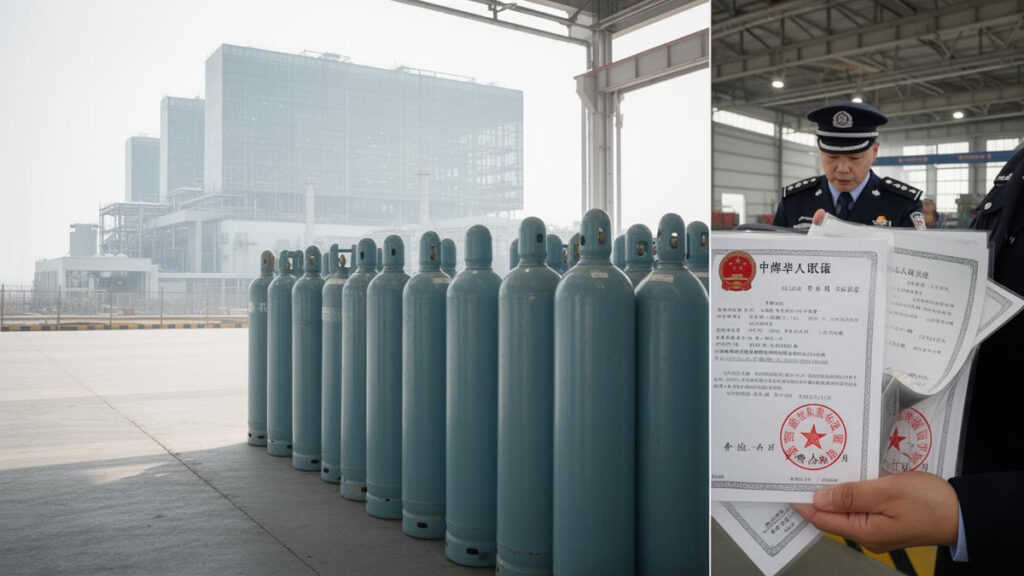
China Halts Helium Exports Effective Immediately, Straining Semiconductor Supply
China’s Ministry of Commerce and the General Administration of Customs announced an immediate temporary export ban on helium on July 10, citing the Foreign Trade Law of the People’s Republic of China. The measure applies to customs commodity code 2804290010 and took effect upon publication.
The ban removes supply from a country that has historically been among the world’s largest helium importers. China’s main export markets in 2024 included the European Union, Japan, South Korea and the United States, according to the announcement.
Helium is used in semiconductor wafer cooling, lithography and leak detection across chip fabrication, as well as in MRI superconducting magnets and aerospace fuel pressurization. A research report from Deutsche Bank cited in the announcement states that semiconductor manufacturing accounts for 21 percent of global helium demand and that no substitute exists for the ultra-clean inert environment helium provides in chip production.
The timing reflects acute domestic tightness. Zhang Zhijun, deputy manager of the production department at Shanghai Youjiali Specialty Gases, told CCTV Finance that helium demand has surged recently and that the factory now operates two shifts at full capacity yet still cannot meet orders. “Daily price changes,” he said, characterizing the current market. Daily production volumes have doubled since the start of the year but have not closed the supply gap, Zhang disclosed.
The announcement states that subsequent adjustments to the ban will be announced separately, but gives no timeframe or criteria. Spot pricing inquiries placed with regional distributors earlier this quarter returned quotes that varied by the hour—a phenomenon typically reserved for LNG, not industrial gases.
Semiconductor fabs, particularly those in Northeast Asia, had already been managing allocation constraints from Qatar and U.S. suppliers over the past eighteen months. The withdrawal of Chinese re-export volumes is expected to tighten spot availability further and push buyers toward longer-term offtake commitments at higher floor prices.
Helium differs from other industrial feedstocks in that it cannot be synthesized and escapes from containment over time. Global reserves are concentrated in a handful of liquefied natural gas fields in Qatar, the United States, Russia and Algeria. China’s domestic helium production remains limited relative to consumption, making it a net importer that has historically processed and re-exported purified grades to regional buyers.
The ban follows a series of export controls Beijing has imposed on strategic materials, including rare earths and gallium. Market participants now face the prospect of reconfiguring supply chains that had relied on Chinese tolling capacity and short-notice spot purchases.
The Ministry of Commerce provided no estimate of how long the temporary measure will remain in force. Procurement managers at chipmakers and medical imaging suppliers will be watching for any clarification on exemptions, licensing procedures or volume caps that might allow limited outbound shipments under contract.


Leave a Reply