NASA rolls Artemis II SLS rocket back to VAB after new helium leak
Helium Flow Fault Pushes Artemis II Back to VAB, April Launch Now Earliest Option
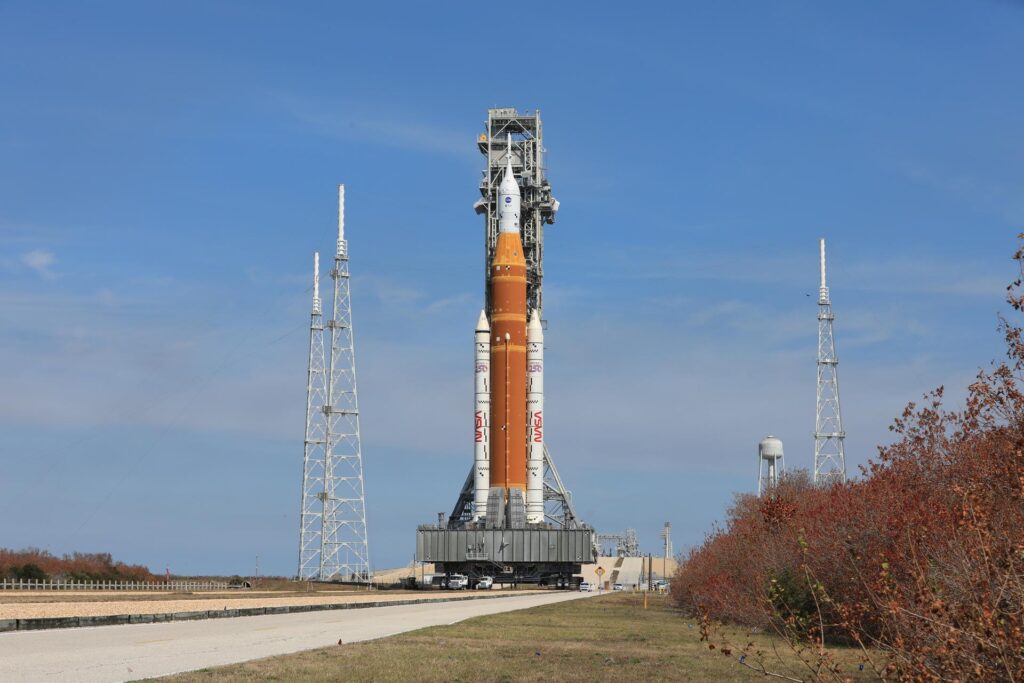
NASA’s Space Launch System rocket returned to the Vehicle Assembly Building on 25 February following a helium flow anomaly in the upper stage, shelving plans for an early March launch of the Artemis II crewed lunar mission.
Launch director Charlie Blackwell-Thompson authorised the rollback at 9:28 a.m. EST. The SLS rocket and Orion spacecraft began moving off Launch Pad 39B at 9:38 a.m. and completed the 12-hour crawl back inside the VAB by approximately 8 p.m., according to NASA.
The agency is now targeting no earlier than April for launch, pending repairs and analysis of the helium system. Any March attempt is off the table.
Helium pressurises propellant tanks and purges fuel lines in rocket operations. The anomaly occurred in the upper stage, the element that will propel the Orion spacecraft toward the Moon. NASA said technicians will establish work platforms inside the VAB to diagnose the flow irregularity. While inside, teams will replace batteries on the upper stage, core stage and solid rocket boosters, and service the flight termination system.
The setback comes days after NASA completed a wet dress rehearsal—a full fuelling and countdown simulation—that appeared to resolve earlier hydrogen leak concerns. Engineers had believed persistent hydrogen leaks affecting tanking operations were finally contained. In early February, fuel loading was paused twice after leak rates rose at the liquid hydrogen interface, forcing controllers to stop the countdown at T-minus five minutes and drain the vehicle.
Hydrogen handling remains a vulnerability for the SLS programme. Similar issues delayed the uncrewed Artemis I mission in 2022, leading to multiple scrubbed launch attempts before that flight lifted off in November of that year.
The latest problem adds to the operational history of a mission already contending with hydrogen leaks, shifting launch windows and the aftershocks of Boeing’s troubled Starliner programme.
When the mission does proceed, Artemis II will carry NASA astronauts Reid Wiseman, Victor Glover and Christina Koch, along with Canadian Space Agency astronaut Jeremy Hansen, on a 10-day lunar flyby. The Orion spacecraft will travel approximately 7,600 kilometres beyond the far side of the Moon, marking the first deep-space crewed mission since 1972.
NASA had identified several early March launch opportunities for Artemis II, with secondary windows in April under consideration. The rollback decision eliminates the March slots. The agency has not provided a revised launch date or timeline for completing the upper stage helium diagnostics.
For helium suppliers with long-term contracts tied to aerospace feedstock, delays of this scale can ripple through delivery schedules, though NASA has not disclosed which contractors supply helium for SLS operations or whether the fault affects procurement timelines.


Leave a Reply