China Imposes Export Controls on Helium, a Critical Semiconductor Gas; Samsung, SK Hynix Face Advanced Process Disruption
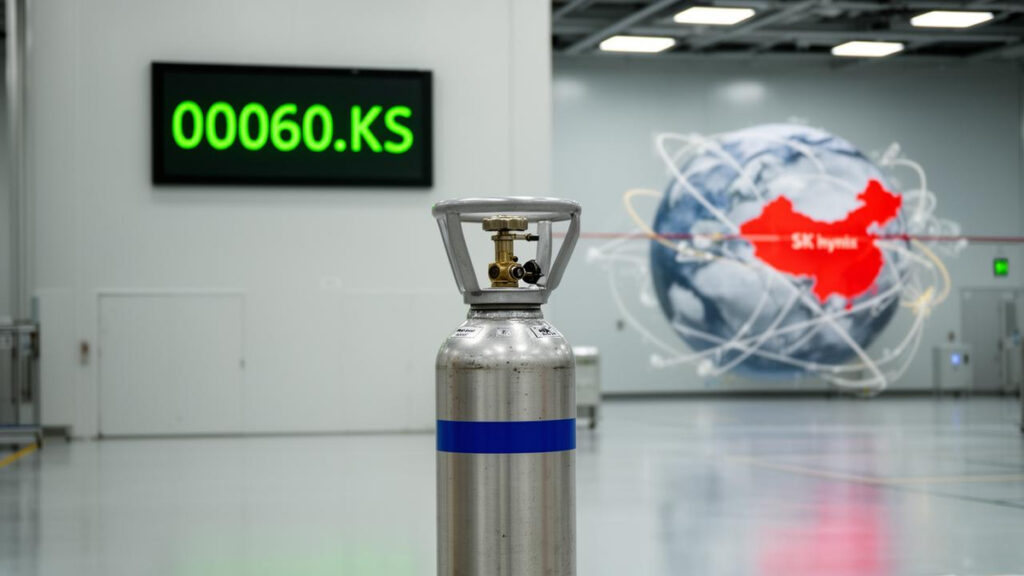
China Adds Helium to Export Control List, Raising Semiconductor Supply Chain Concerns
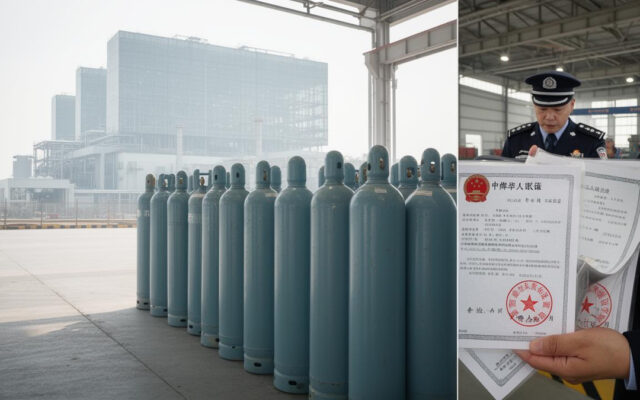
China’s Ministry of Commerce and General Administration of Customs classified helium as a temporary export-controlled item effective July 10, tech outlets Mydrivers and ESMChina reported. The designation took effect immediately with no grace period.
The measure targets a gas central to semiconductor fabrication, particularly in advanced-node lithography. While China produces only about 3 million cubic meters of helium annually—roughly 1.6 percent of global supply according to USGS data cited by Mydrivers—the timing adds pressure to supply chains already stretched by AI chip demand.
Helium’s role in extreme ultraviolet lithography equipment makes the gas difficult to substitute. A single EUV tool consumes more than 10,000 liters of helium per year, ESMChina reported. Liquid helium maintains superconducting magnets and optical systems at 4 Kelvin, or minus 269 degrees Celsius. No other cooling medium can reach that temperature range.
Temperature stability matters. ESMChina noted that a 0.1-degree fluctuation can trigger lithography errors severe enough to scrap an entire wafer.
Consumption rises sharply as process nodes shrink. ESMChina presented data showing helium use per wafer climbs from approximately 24 liters at 90-nanometer and mature nodes to 40–60 liters at 14–28 nanometers. At 7-nanometer nodes, consumption reaches about 120 liters. Three-nanometer processes demand 150 liters or more per wafer.
The figures underscore exposure for foundries running high volumes of EUV-based production at 3-nanometer and below. Samsung Electronics and SK Hynix both operate advanced-node capacity in that category.
Global helium production remains concentrated. The United States leads at 81 million cubic meters annually, followed by Qatar, Russia, Algeria and Canada, according to the USGS figures Mydrivers cited. China and Poland each produce around 3 million cubic meters.
Mydrivers assessed that China’s small share means the export controls are unlikely to deliver an immediate shock to global foundry operations. Yet the outlet noted the measure could act as a destabilizing factor for a supply chain already under strain from the AI chip ramp.
Helium is used across deposition, wafer cooling and etching stages in semiconductor manufacturing. Its inert properties and thermal characteristics make it essential feedstock, particularly in processes requiring ultra-high purity and temperature control.
The classification as a strategic material follows China’s pattern of restricting exports of materials tied to advanced manufacturing. The immediate implementation, without a transition window, leaves little room for downstream users to adjust procurement or inventory strategy in the near term.
ESMChina characterized helium as virtually irreplaceable in EUV cooling systems. As chipmakers push toward 2-nanometer and gate-all-around transistor architectures, helium intensity per wafer is expected to climb further, tightening the link between gas availability and leading-edge capacity utilization.

Leave a Reply