Has the Iran War Triggered Another Semiconductor Crisis?
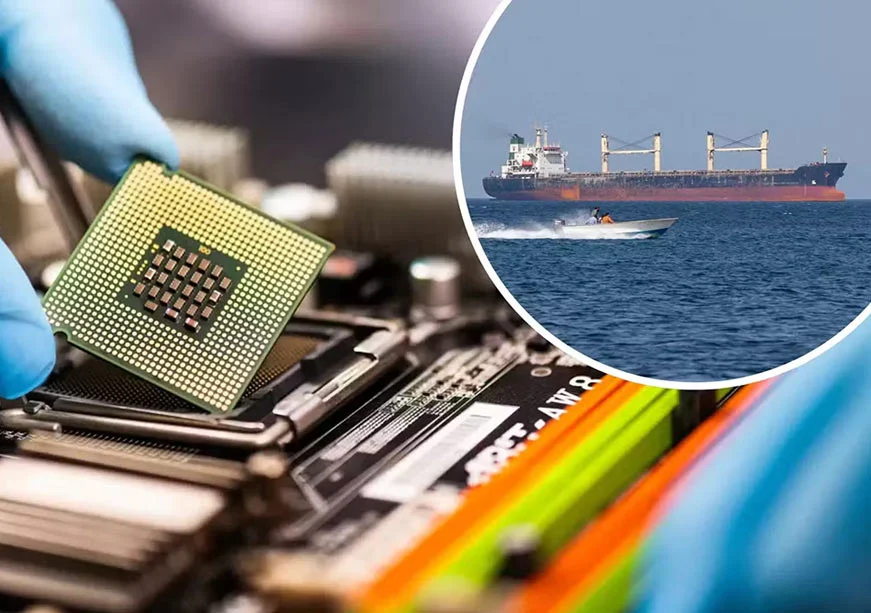
Qatar Helium Supply Disruption Coincides With Memory Chip Shortage
The closure of Qatar’s Ras Laffan Industrial City following Iranian attacks has halted production at the world’s largest LNG export facility, cutting off access to a critical source of helium for semiconductor fabricators. Qatar supplies approximately 34 percent of global helium through three plants, two of which extract the gas as a byproduct of LNG operations.
Helium spot prices have already risen, according to Reuters, though the immediate impact on chip manufacturers remains limited. Most supply agreements are structured as long-term contracts rather than spot purchases. An oversupply from previous years is absorbing some of the shock.
That cushion will not last indefinitely. A prolonged outage at Ras Laffan could force suppliers to invoke force majeure provisions, releasing them from contractual obligations. Taiwan and South Korea face particular exposure, as both jurisdictions source most of their helium from Gulf Cooperation Council nations.
Semiconductor etching relies heavily on high-purity helium. Over time the chip sector has become the largest global consumer of the gas. The element is obtained chiefly as waste gas during LNG liquefaction, linking helium availability to natural gas infrastructure and geopolitics in producing regions.
The supply disruption arrives as the memory chip segment faces its own constraint. Demand from AI data centres has driven a shortage of memory semiconductors, a category that underpins digital and consumer electronics. The two pressures—one on feedstock, the other on capacity—are converging.
Neither crisis alone would paralyse the sector. Combined, they tighten margins for error.
The Strait of Hormuz remains closed following the Iranian strikes, blocking shipping routes for LNG cargoes that would ordinarily move to liquefaction terminals and helium extraction units. Ras Laffan handles the bulk of Qatar’s gas export volume, and its shutdown removes a large share of downstream helium output from the market in a single event.
Long-term offtake agreements insulate buyers from immediate price volatility, but they do not guarantee physical delivery during force majeure. Semiconductor fabs in East Asia maintain some inventory as a buffer, yet extended supply interruptions would require either drawing on alternative sources or curtailing production runs.
Global helium production in 2025 has been concentrated in a handful of jurisdictions, according to data cited by Reuters. Qatar’s 34 percent share places it ahead of other producing regions, making the current outage a systemic risk rather than a localised one.
Memory chip tightness, meanwhile, reflects demand growth rather than supply destruction. AI workloads require dense, high-performance memory arrays, and data centre buildouts have absorbed available capacity faster than new fabs can ramp. The mismatch has persisted for months.
The convergence of a helium supply shock with ongoing memory chip constraints highlights the interdependencies in semiconductor supply chains. Etching processes require helium; memory production requires etching capacity. A shortage in one input compounds bottlenecks elsewhere.
Taiwan and South Korea together account for a significant share of global memory chip output. Both rely on GCC helium, and both are now weighing procurement alternatives as the Qatar situation extends beyond initial forecasts.

Leave a Reply