Highest Helium Grade Recorded in North America: Pulsar Helium’s Minnesota Project as the Domestic US Solution | Made In America – Article
Minnesota Project Reports 8.1% Helium Concentration as Geopolitical Outages Tighten Global Supply
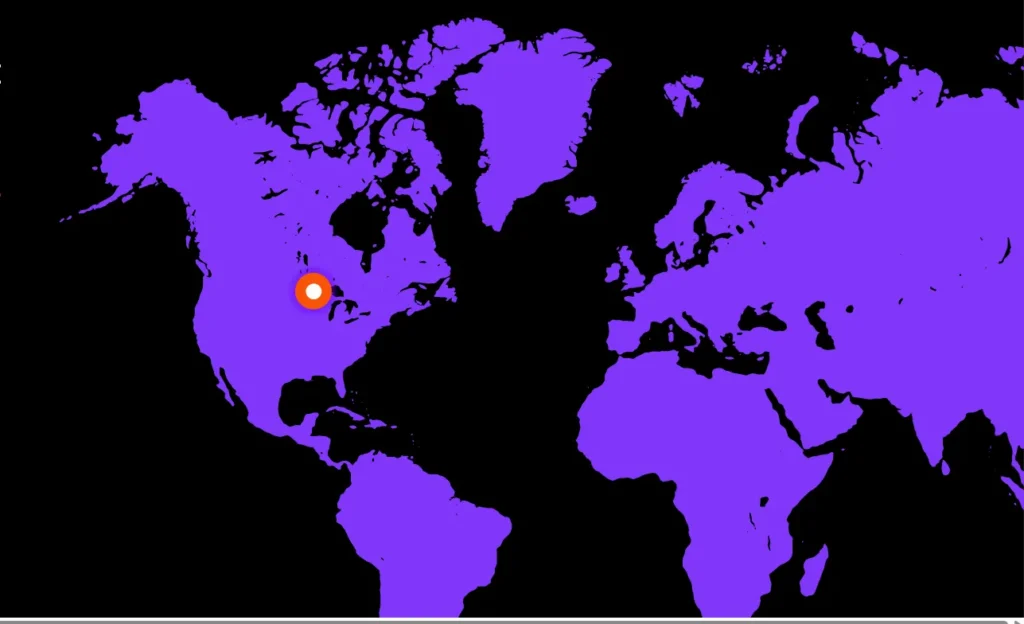
Pulsar Helium has recorded an average helium concentration of 8.1% across seven wells at its Topaz project in northern Minnesota, a grade the company says supports standalone commercial extraction without reliance on natural gas co-production. The figure places the asset among the highest-grade primary helium plays drilled in North America.
The project advances as geopolitical disruptions have removed roughly 45% of global helium supply. Closure of the Strait of Hormuz has severed Qatar’s export route for helium, while Russia has introduced export controls. Qatar previously accounted for approximately 35% of global supply, Russia around 10%. QatarEnergy’s CEO has indicated that the production facility could require three to five years to return to full operation.
More than 95% of global helium is produced as a byproduct of natural gas processing, limiting the ability to scale output in response to price signals or demand growth. Pulsar’s project structure bypasses that constraint. Primary helium deposits require neither natural gas feedstock volumes nor exposure to crude helium pricing tied to hydrocarbon economics.
Minnesota finalised helium-specific operational regulations in June 2026. According to Pulsar, the legislation draws substantially on work conducted at Topaz, removing what had been regulatory uncertainty and establishing a permitting pathway that did not previously exist in the state.
Pulsar has engaged Chart Industries to analyse gas composition at Topaz and begin designing a helium processing facility tailored to the project’s characteristics. The company also confirmed the presence of Helium-3, a rare isotope with applications in quantum computing and fusion research. Helium-3 is scarce on Earth and commands premium pricing in specialty markets.
Production-ready well drilling is scheduled to begin in September 2026. An independent resource update is underway, alongside preparation of an economic assessment. Pulsar is targeting 2027 for production guidance.
The United States remains the world’s largest helium consumer. Demand is projected to double by 2035, driven by semiconductor fabrication, medical imaging and quantum computing infrastructure. MRI systems, space launch programmes and chip manufacturing all depend on liquid helium for cryogenic cooling. Substitutes do not exist at commercial scale.
Helium supply has historically been dominated by three jurisdictions: the United States, Qatar and Russia. That architecture is under pressure. The current supply deficit has no short-term self-correcting mechanism, according to Pulsar, given the absence of new large-scale projects entering production and the lead time required to restart facilities in conflict zones.
Topaz sits in a jurisdiction with existing midstream infrastructure, access to transport corridors and proximity to end users in the industrial midwest and eastern seaboard. The project’s 8.1% average helium content contrasts with typical natural gas fields, where helium concentrations range from 0.3% to below 1%.
Pulsar trades on the TSX Venture Exchange under the ticker PLSR. The company has not yet released capital cost estimates or tolling arrangements for the planned processing facility.

Leave a Reply