2026 Global Helium Supply Crisis: Strategic Implications for Semiconductor and Storage Supply Chains
Semiconductor Fabs Race Clock as Mideast Turmoil Cuts 30% of World Helium Supply
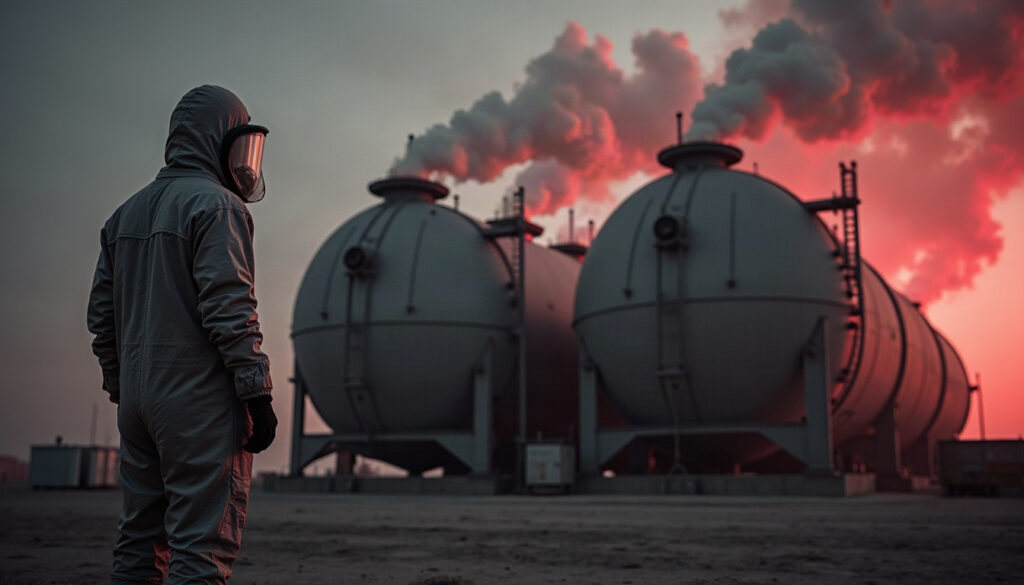
Qatar Energy’s declaration of force majeure on March 2, 2026, has removed between 30% and 38% of global helium output from the market, according to industry estimates. The shutdown at Ras Laffan Industrial City – the world’s largest helium production complex – coincides with the effective closure of the Strait of Hormuz to Western commercial shipping, creating a dual supply shock that threatens semiconductor and storage device manufacturing across Asia.
The strait closure has forced carriers to reroute around the Cape of Good Hope, adding 3,500 nautical miles and 10 to 14 days to voyages. That detour costs roughly $1 million per voyage in additional fuel and, critically, increases boil-off losses during transport. Liquid helium must be held at -268.9°C in cryogenic ISO containers; longer transit times mean less usable product reaches port.
Qatar Energy has given no restart date for Ras Laffan. The facility accounts for roughly one-third of the world’s 190 million cubic meters of annual helium production, with helium extracted as a byproduct of liquefied natural gas processing.
Read also: Taiwan’s Helium Imports Shift to the U.S. as Geopolitical Risk Reshapes Semiconductor Supply Chains
Regional inventories at major semiconductor fabricators are estimated at around six months. Other sectors hold significantly less. The clock is running.
Asia-Pacific Exposure
South Korea imported 64.7% of its helium from Qatar in 2025, leaving memory producers Samsung and SK Hynix heavily exposed. Taiwan’s foundry sector, led by TSMC, faces similar structural risk from its reliance on Qatari crude helium imports.
Mainland China imported over 4,924 tonnes of helium in 2025, with domestic production covering only a fraction of demand. Qatar and Russia are the primary suppliers. Japan has a more diversified base, sourcing roughly half its helium from the United States, though absolute volumes remain vulnerable.
Helium is essential to semiconductor fabrication, used in etching, wafer cooling and as a carrier gas in chemical vapor deposition. It is also critical in MRI manufacture and certain aerospace applications. The gas is finite, non-renewable and cannot be synthesized.
Logistics and Upside Scenarios
Some analysts expect spot prices to spike if the strait remains closed and Qatari production stays offline beyond the second quarter. Others point to potential relief from increased output at North American facilities and from projects in Russia, though Russian helium faces its own export constraints and sanctions-related complications.
One procurement manager at a Taiwanese equipment maker said his team had begun scenario planning in late February, before the force majeure was declared, after testing withdrawal schedules against contract volumes and realizing the gap.
The immediate question for trade executives is whether existing long-term offtake contracts will be honored and at what purity grade, or whether suppliers will invoke force majeure clauses and divert volume to higher-margin spot buyers.
With no timeline for Ras Laffan’s return and the strait situation fluid, procurement teams are being forced to model inventory burn rates, identify backup liquefaction and tolling capacity, and evaluate whether to lock in available spot volume despite elevated pricing.


Leave a Reply