Semiconductor manufacturing faces helium supply shortage
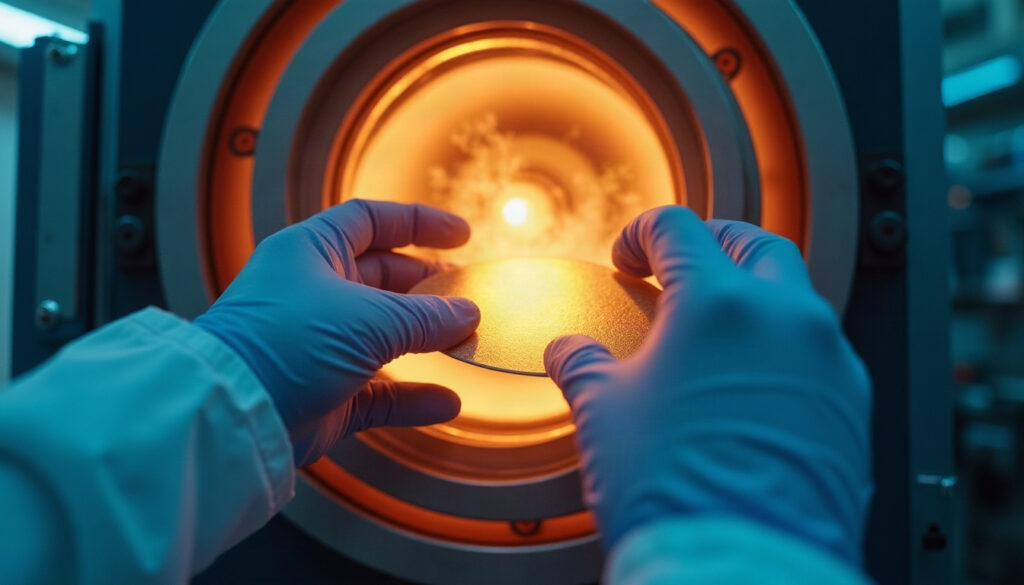
Demand from Chip Fabs Set to Multiply Fivefold by 2035 Amid Finite Reserves
Helium consumption in semiconductor manufacturing is forecast to increase fivefold by 2035, according to a report from IDTechEx, placing fresh pressure on a market that has struggled with supply disruptions for two decades.
The forecast comes as government-backed capacity expansion programmes — including the US Chips Act and EU Chips Act — drive investment in new wafer fabs. Those facilities rely on helium for wafer cooling during production, where its thermal conductivity and inert properties allow rapid heat removal as chip geometries shrink and process complexity rises.
The compound effect of manufacturing expansion and tighter node requirements is pushing helium demand beyond historical norms. Applications in AI, quantum computing and automotive chips, in particular, require enhanced thermal management during fabrication. Electric vehicles and 5G infrastructure are also accelerating semiconductor output, compounding the strain on helium availability.
Read also: 2026 Global Helium Supply Crisis: Strategic Implications for Semiconductor and Storage Supply Chains
Supply interruptions over the past twenty years — driven by plant outages, maintenance schedules and geopolitical friction — have already forced some chipmakers to adjust production rates when spot availability tightened or contract volumes fell short. Price swings have followed each disruption.
New production is expected from Qatar and Russia, but both regions carry geopolitical risk that complicates long-term offtake planning. The United States Geological Survey estimates global helium reserves at roughly 40 billion cubic metres, sufficient for around 250 years at current production rates. That timeline compresses sharply if semiconductor demand grows at the pace IDTechEx projects.
The mismatch between supply growth and demand acceleration is prompting interest in reclamation technology. Fibre optics and cryogenics sectors have already adopted helium recycling to cushion feedstock costs, according to the IDTechEx report, which also notes growing reclamation activity in aerospace and automotive leak testing.
Semiconductor fabs have been slower to adopt closed-loop systems, in part because upfront capital for purification and liquefaction infrastructure remains high and because many existing facilities were not designed with recovery in mind. Retrofitting older plants to capture and re-liquefy used helium adds both cost and engineering complexity. Having tried to source spot volumes during a tightening cycle earlier this year, procurement teams at several fabs are now revisiting contract terms and exploring partnerships with suppliers that can offer reclaimed gas at purity grades suitable for wafer cooling.
Chipmakers that lock in tolling agreements or invest in midstream purification capacity may gain a cost advantage as upstream supply remains concentrated in a handful of volatile regions. For now, the semiconductor industry faces a choice: accept rising feedstock risk or shift capital toward sustainability measures that until recently seemed optional.
The IDTechEx report underscores that while total reserves appear ample in aggregate, extraction, processing and delivery bottlenecks can constrain availability well before physical depletion becomes a concern. As node sizes continue to fall and fab count rises, helium availability will increasingly shape both production economics and site location decisions.



Leave a Reply